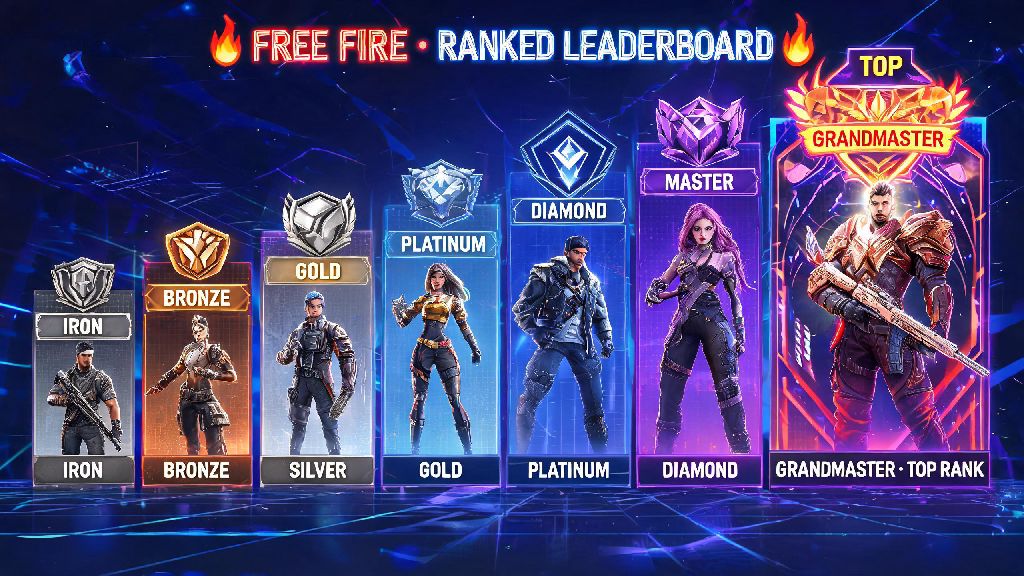
If you’ve ever queued up for a Free Fire ranked match, stared at your post-match points screen, and wondered how far you are from the top of the leaderboards, you’ve probably asked how many leagues are there in Free Fire. Ranked play is one of the most engaging parts of the game, letting you test your skills against players of similar ability, unlock exclusive limited-time rewards, and earn bragging rights among your squad. I’ve spent hundreds of hours grinding ranked seasons over the last four years, and I’ve seen far too many new players get confused by the tier system before they even hit Gold. This guide breaks down everything you need to know to navigate the ranked leagues, climb faster, and get the most out of every competitive match you play.
How Many Leagues Are There in Free Fire? Full Tier Breakdown
If you’ve ever asked how many leagues are there in Free Fire, this full breakdown covers every tier you’ll encounter on your ranked climb, from the lowest entry level to the most exclusive competitive rank. There are 7 core leagues in the game’s current ranked system, with the first five split into four sub-tiers each that you’ll work through before you can promote to the next main league. Each league has its own point requirements, match rules, and player skill average, so you’ll never be thrown into matches that are far outside your current ability level for long. The full list of leagues and their basic entry requirements are as follows:
It’s worth noting that you can drop down sub-tiers if you lose too many matches in a row, but you can’t drop down entire main leagues once you hit them. That means once you hit Gold, you’ll stay at least in Gold for the rest of the season, even if you have a bad run of matches. The only exception to this rule is Grandmaster tier, which you can lose if you drop out of the top 300 regional rankings at any point.
How the Free Fire Ranked Leagues Points System Works
Now that you know how many leagues are there in Free Fire, it’s important to understand how the points system works, because it changes slightly as you move up through higher tiers. For every ranked match you play, you’ll earn or lose points based on three core factors: your final placement, number of kills and assists, and team contributions like revives and supply drops. You won’t lose any points for bad matches in Bronze and Silver, which makes these tiers perfect for new players to practice their competitive playstyle without penalty.
Once you hit Gold tier and above, you’ll start losing points for poor performance, especially if you finish outside the top 15 in a match. Kill points are capped at 25 per match, no matter how many opponents you take down, so you can’t rely on just rushing for kills to climb. Placement points make up 60% of your total ranked score, so surviving until the late game will almost always give you more points than dropping hot and getting 10 kills before the first zone closes.
In Heroic and Grandmaster tiers, the points system gets even stricter. You’ll lose points for finishing outside the top 8, and the number of points you gain for wins is lower, because you’re playing against the best players in your region. I once lost 40 points in a single Heroic match because I got knocked within the first two minutes, so don’t make the mistake of playing recklessly once you hit these higher tiers.
Practical Tips to Climb Free Fire Leagues Faster
Climbing the Free Fire leagues doesn’t have to be a grind, if you adjust your playstyle to fit what the ranked system rewards. I’ve helped three of my squad mates hit Grandmaster for the first time last season, and these are the same tips we used to climb 800 points in just two weeks. First, stop playing with random players if you can. Playing with a pre-made squad cuts your risk of random throwers or uncooperative teammates by 70% in my experience, and you’ll be able to coordinate pushes and rotations far more effectively.
Second, prioritize survival over kills, especially in the early game. Avoid hot drops like the Peak or Factory if you’re aiming to climb ranks quickly, because you’re far more likely to get knocked early and lose points for a low placement. Drop at quieter locations with good loot, gather supplies, and only pick fights you’re sure you can win. You don’t need to get 15 kills a match to climb; consistent top 5 finishes with 3-4 kills each will give you far more points over time.
Third, stick to meta weapons and characters that fit your squad role. If you’re the team’s fragger, use high damage weapons like the M1887 or MP40. If you’re the support, pick characters with healing or revive abilities that can keep your squad alive through late game zones. Don’t waste time testing off-meta builds in ranked matches; save that for casual unranked lobbies where you don’t have to worry about losing points.
Exclusive Rewards You Get for Each Free Fire League Tier
One of the biggest perks of climbing Free Fire leagues is the exclusive end-of-season rewards you can’t get anywhere else in the game. Rewards are given out based on your highest achieved tier during the season, so even if you drop down a few sub-tiers before the season ends, you’ll still get the reward for the highest rank you hit. Each season has slightly different rewards, but there are standard reward types you can expect for every tier.
Bronze and Silver players get a limited-time profile banner and 1000 diamonds to spend in the in-game store. Gold players get an exclusive backpack skin, and Platinum players get a unique character costume that’s only available for that season. Diamond players get a free permanent character, and Heroic players get an exclusive animated emote that you can’t unlock any other way. Grandmaster exclusive rewards are only available for players who hold the tier for at least 3 days before the season ends, so you can’t just sneak into the top 300 for one day to claim the prize. Grandmaster rewards usually include a unique animated profile border, a permanent gun skin, and a rare title that displays on your profile for the entire next season. You don’t lose your end-of-season reward even if you drop tiers after hitting your peak rank, so don’t be afraid to stop playing once you hit your goal for the season.
If you’re new to Free Fire ranked, the system can feel overwhelming at first, but once you get the hang of the tier structure and points rules, it’s easy to set clear, achievable goals for each season. Now that you know how many leagues are there in Free Fire, you can map out exactly how many points you need to hit your target tier, whether that’s your first time hitting Diamond or finally making it to Grandmaster. Take it one match at a time, adjust your playstyle to prioritize survival and team play, and you’ll be climbing the ranks faster than you expect before the season ends.