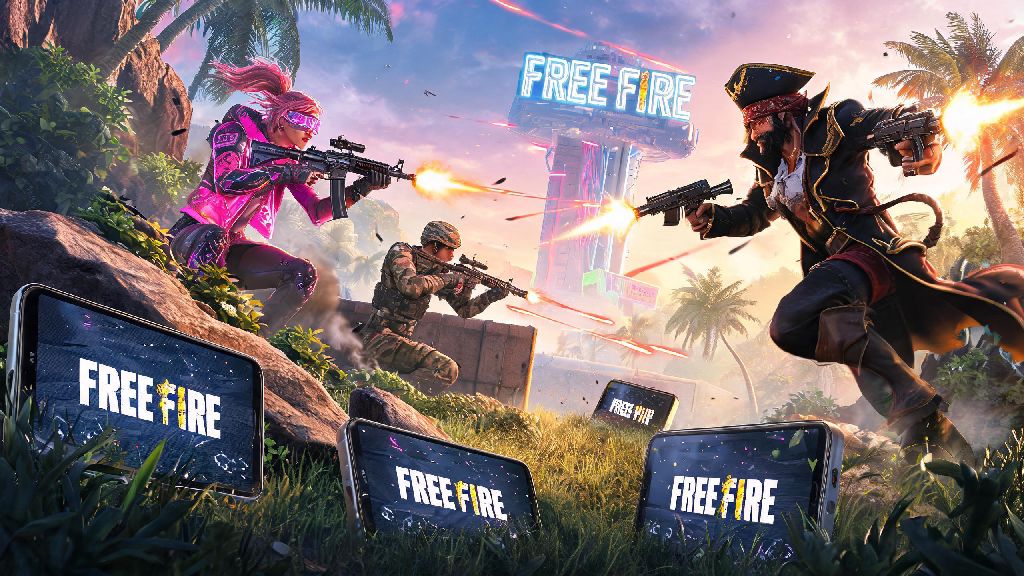
If you've spent any time playing mobile battle royales in 2026, you've almost certainly jumped into a Free Fire match at least once. Fast-paced, accessible, and packed with unique character skins and game modes, it's held a top 3 spot on global app store download charts for six years running. But even long-time players often don't know who created Free Fire, or how a small development team's original vision shaped the game we play today.
Who Created Free Fire, Exactly?
Most people assume Garena created Free Fire from scratch, but that's not quite the full story. The core game was first developed by Vietnamese independent studio 111dots Studio, a small team of 20 developers who wanted to build a battle royale that worked smoothly on low-end smartphones, a gap no big studio was filling in the mid-2010s. Garena saw the game's potential early, acquired the studio, and led global publishing and ongoing development, with the original 111dots team still leading core design decisions as of 2026.
That's why you'll often see both 111dots Studio and Garena listed as creators depending on where you look. The original team still handles core gameplay balancing, while Garena's global team manages regional events, licensing, and cross-promotions with celebrities and brands. As of 2026, 70% of the original development team still works on the game full-time, which is almost unheard of for a mobile title that's been out for almost a decade.
How the Original Creator Vision Shaped 2026 Free Fire Features
The original 111dots team's number one priority was accessibility, and that focus hasn't faded even as the game has added dozens of new features over the years. Unlike other battle royales that require 8GB of RAM and a flagship phone to run smoothly, the 2026 version of Free Fire still works perfectly on devices with just 2GB of RAM, and takes up less than 1GB of storage after installation.
That commitment to accessibility is why Free Fire has such a massive player base in emerging markets across Southeast Asia, Latin America, and Africa, where most people use mid-range or low-end smartphones. Even casual players who don't know who created Free Fire can tell the difference between its user-friendly design and the clunky, resource-heavy design of competing battle royales. Over 60% of Free Fire's 2026 daily active users are from regions where average smartphone prices are under $200, a demographic most other AAA mobile games completely ignore.
You can see the original team's influence in other small, intentional design choices too. Matches only last 10 minutes, far shorter than other battle royales, so people can play during commutes or short breaks. You don't have to spend hours grinding to unlock fun characters or cosmetics, either. If you want to check out the latest 2026 feature drops aligned with the original vision, visit the official Free Fire update page for patch notes and event announcements.
Common Myths About Free Fire's Creators Debunked
After almost 10 years of global popularity, there are a lot of false rumors floating around about who created Free Fire and what their goals for the game are. We've rounded up the most common ones we saw on 2026 community forums to set the record straight:
Most of these myths pop up because people compare Free Fire to other more predatory mobile games, but the original development team's focus on accessibility has kept monetization far more fair than most of its competitors. You don't have to spend a dime to climb ranked ladders or access all core game modes, which is a big part of why it's still so popular in 2026.
We've even seen the team push back against Garena's requests for more paid loot boxes in past years, prioritizing player experience over short-term revenue. That level of creative control is rare for a studio that was acquired by a big global publisher, but it's worked out for everyone involved so far.
What the Creators Have Planned for Free Fire Beyond 2026
Even after 10 years of success, the team isn't slowing down. We got a sneak peek at their 3-year roadmap in a 2026 community Q&A, and there are a lot of exciting updates in the works that stay true to their original accessibility mission. Many fans who asked about long-term plans during the Q&A wanted to make sure the original vision of who created Free Fire would stay intact as the game grows, and the team confirmed that accessibility will always be their top priority.
First, they're working on an even lighter version of the game that will work on devices with just 1GB of RAM, opening the game up to another 200 million potential players across low-income regions. They're also adding more localized content for under-served regions, including region-specific character skins, game modes, and community events that reflect local cultures, instead of just using generic global content for everyone.
They're also testing a new cross-play feature that will let mobile players compete against PC and console players, but only if they opt in. The team has promised that cross-play will never be mandatory, so players who only use mobile won't have to worry about going up against players with mouse and keyboard advantages.
The team has also said they have no plans to increase the game's minimum specs for the foreseeable future, so even if you're still using a 3 or 4 year old phone, you'll be able to play all new updates for at least the next 3 years.
Next time you queue up for a 10-minute Free Fire match in 2026, you'll have a better idea of the small, dedicated team that built the game from scratch. Knowing who created Free Fire makes it easier to see why it's so different from other mobile battle royales, with its unwavering focus on accessibility, fair play, and fun for everyone no matter what device they use. If you want to keep up with all future updates from the development team, make sure to follow their official social media channels and sign up for community newsletters.