If you’re a regular Free Fire player, you’ve probably spent hundreds of hours dropping onto Bermuda, grinding for elite pass skins, and clutching 1v3 fights to get that sweet Booyah. From what I’ve seen running local Free Fire tournaments for my community over the past 5 years, most players never even think to ask about the team that built the game they love. If you’ve ever wondered who founded Free Fire, you’re in the right place. We’re breaking down everything you need to know about the game’s creators, its origin story, and the small choices that turned it into one of the most popular mobile games in the world.
Who Founded Free Fire: Meet the Core Development Team
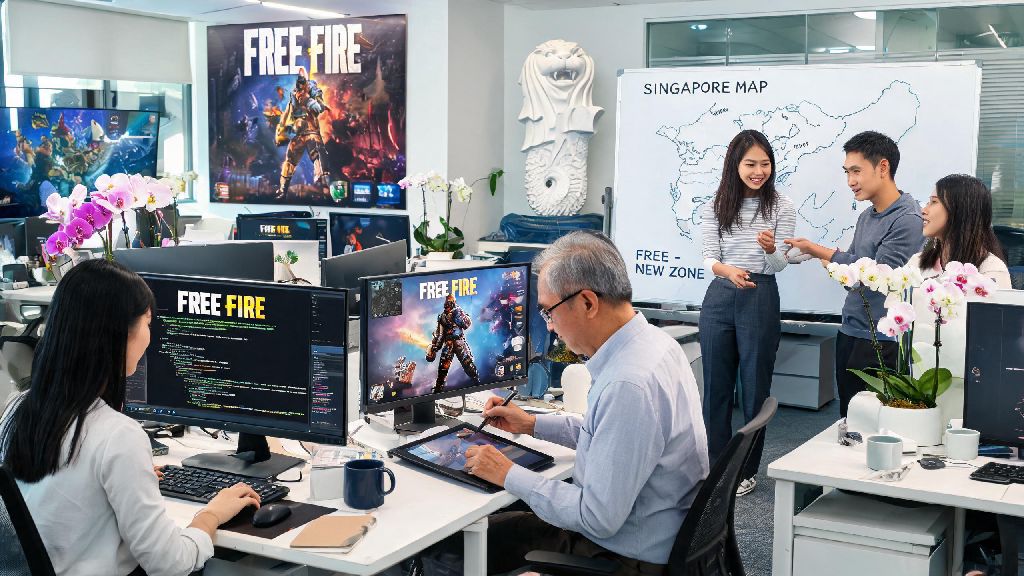
Unlike many popular indie games that are built by a single coder or small group of hobbyists, Free Fire was built by Garena’s in-house Singaporean development studio. Garena is the digital entertainment arm of Sea Limited, a global consumer internet company founded by Forrest Li, the founder and CEO of Sea Limited. Li, a Chinese-born Singaporean entrepreneur, first launched Garena in 2009 as a gaming platform for PC players in Southeast Asia, before expanding into mobile game development in the mid-2010s. When people ask who founded Free Fire, they’re often looking for a single famous name, but the reality is far more collaborative.
It’s a common myth that Free Fire was built by a small team of independent developers outside of Garena, but that’s not the case. The core Free Fire team had over 40 developers, designers, and product managers working full time on the game during its initial development phase. Most of the team had years of experience building mobile games for Southeast Asian markets, so they knew exactly what players in the region were struggling with when it came to existing titles.
You won’t see a single “founder” name attached to Free Fire in most official materials, and that’s intentional. The team has always framed the game as a collective effort, rather than the work of one public face. That said, Forrest Li has spoken publicly about how Free Fire was one of the company’s riskiest projects at the time, and how most industry insiders thought it would fail to compete with bigger battle royale titles already in the works.
The Backstory Behind Free Fire’s Initial Launch
Back in 2016, the battle royale genre blew up overnight after the release of PUBG on PC. Millions of players around the world were obsessed with the 100-player survival format, but there was one big problem: most mobile ports of battle royale games were too heavy for the average smartphone used in emerging markets. The team who founded Free Fire didn’t set out to make a global blockbuster, they just wanted to make a game that worked for players who were ignored by other big studios.
The Garena team noticed that 70% of mobile players in Southeast Asia, India, and Latin America used mid-range or low-end phones that couldn’t run games over 1GB in size without lagging or crashing. They saw a gap in the market for a lightweight battle royale game that ran smoothly on almost any device, without sacrificing the core fun of the genre. That’s where the initial idea for Free Fire was born, after months of user research with players across the region.
When the game first launched in 2017, it had a less than 500MB download size at launch and a default 10-minute match duration that was way shorter than the 30+ minute matches of other battle royale games at the time. It was an instant hit. Within six months of launch, it had over 100 million registered users across Southeast Asia and Latin America. Many players tried it because it was the only battle royale game their phone could run, and stayed for the fast-paced gameplay and regular, player-focused updates.
Key Choices That Turned Free Fire Into a Global Hit
Plenty of other companies tried to launch lightweight battle royale games around the same time as Free Fire, but none of them came close to its level of success. The Garena team made a handful of very intentional choices early on that set the game apart from its competitors, and most of them are tied directly to their deep understanding of their target audience. The team who founded Free Fire understood that players didn’t just want a game that ran well – they wanted a game that felt like it was made for them.
These choices paid off big time. Today, Free Fire has over 1 billion downloads on Google Play alone, and consistently ranks in the top 5 highest-grossing mobile games in markets across Latin America, Africa, and Southeast Asia. The team still follows these core principles today, even as they add more high-end graphics features and game modes for players who own better devices. They never lose sight of the players who made the game popular in the first place.
What the Original Free Fire Team Is Working on Today
Most of the original core development team still works on Free Fire and its related projects, 7 years after the game first launched. They’re no longer a small team of 40, though – the Free Fire team now has over 300 staff across the world, working on everything from game balance updates to local event planning. They still hold weekly feedback sessions with players from different markets to make sure they’re addressing the most common complaints and requests.
One of their biggest recent projects is Free Fire MAX, the high-definition version of the original game that lets players with high-end phones enjoy better graphics, higher frame rates, and more detailed environmental effects. The best part is that MAX is cross-play compatible with the original Free Fire, so players don’t have to leave their friends behind if they upgrade their phone. That decision came directly from player feedback, with thousands of users asking for a way to get better graphics without losing their existing account progress.
The team is also investing heavily in growing Free Fire’s esports ecosystem. The Free Fire World Series, the game’s biggest annual global tournament, now has a prize pool of over $2 million, and draws hundreds of millions of viewers from around the world. They’ve also launched regional leagues in over 20 countries, giving amateur players a path to go pro if they’re good enough. Many of the pro players competing today got their start in small local tournaments the team helped support back in the game’s early days.
They still read player feedback every day, too. If you’ve ever submitted a suggestion through the in-game feedback form, there’s a good chance a member of the development team has seen it. The team has said that many of their most popular features, like the Clash Squad game mode, came directly from player suggestions. They’re also testing new casual game modes for players who don’t want to play competitive ranked matches, with more options set to roll out in the next few updates.
At the end of the day, the answer to who founded Free Fire isn’t just one name – it’s a whole team of people who wanted to build a battle royale game that anyone could play, no matter what kind of phone they owned. Next time you load into a match and get that Booyah, you’ll know exactly who to thank for building the game you love. If you want to learn more about Free Fire’s upcoming updates or pro gameplay tips, be sure to check out our other coverage of the game.