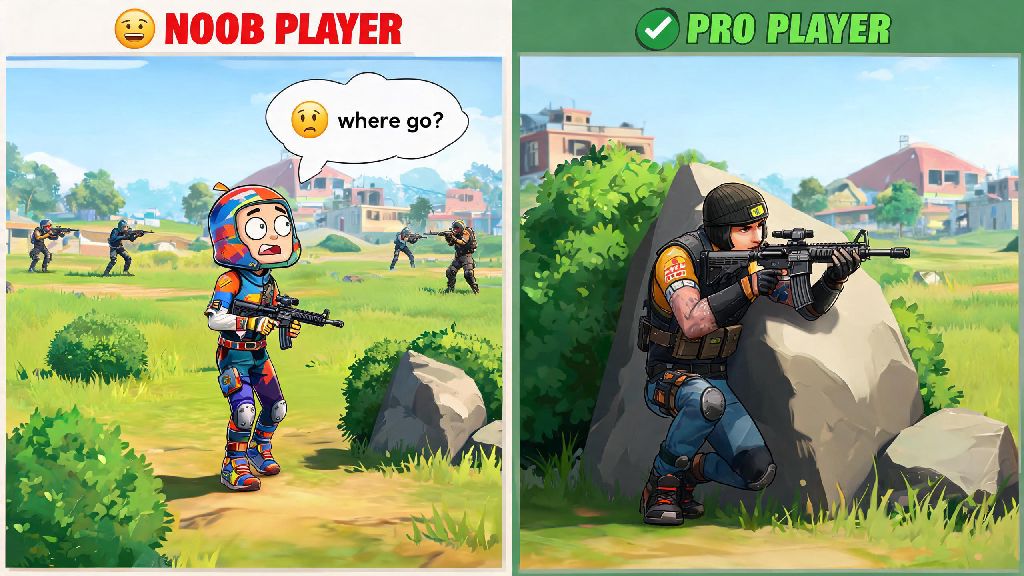
If you’ve ever queued for a ranked Free Fire match only to get taken out in the first two minutes by someone who wandered straight into an open field without cover, you’ve probably wondered who is noob player in Free Fire and what makes their gameplay so different from seasoned players. Most players don’t start out good, and even long-time fans can slip into noob habits if they don’t pay attention to their playstyle. This guide breaks down common traits of new or underperforming players, why those habits hold you back, and simple fixes you can implement the next time you drop into a match.
Core Traits That Define Who Is Noob Player In Free Fire
Not every new player is a noob, and not every noob is new to the game. The label usually sticks to players who repeat the same avoidable mistakes match after match, even if they’ve logged dozens of hours of playtime. Some of the most common traits include:
You might recognize a few of these traits in your own gameplay from time to time, and that’s totally normal. I’ve been playing Free Fire for 4 years, and I still catch myself running across an open field when I’m in a hurry to reach an airdrop, especially if I know there’s a rare gun inside. The difference between a noob and a growing player is that the latter will notice these habits and adjust, rather than writing off every loss as bad luck or blaming their teammates for their own mistakes.
Why Noob Habits Are So Hard To Break For Casual Players
Most players don’t even realize they’re making noob mistakes until someone points it out to them. Casual players often log in for a few matches a week just to unwind, so they don’t pay close attention to their win rates or kill counts, and they don’t watch pro gameplay to pick up better strategies. It’s easy to get stuck in a routine of playing the same way every time, even if that way doesn’t lead to wins.
Another common issue is that many new players learn the game from friends who also have bad habits, so they never get exposed to more effective playstyles. For example, if your squad always drops into the most crowded part of the map and dies instantly, you might think that’s just how the game works, instead of learning to drop in a quieter spot to loot up first before heading into fights. I used to make this exact mistake for the first 6 months I played, and my win rate didn’t go above 5% until I started dropping on the edge of the map first to collect gear before engaging with other players.
A lot of players also associate changing their playstyle with taking the fun out of the game, but that’s not true. Small adjustments don’t make the game less casual, they just make it more satisfying when you actually win a match instead of getting eliminated before you even find a gun. You don’t have to turn into a hyper-competitive pro who yells at their teammates over small mistakes; you just have to be willing to make small changes that make the game more fun for you and the people you play with.
Easy Fixes To Stop Falling Into Noob Player Patterns
You don’t have to grind 8 hours a day like a pro player to fix most noob habits. Even 10 minutes of focused practice per play session can make a huge difference in your performance after a couple of weeks. For example, spend your first match of the day only practicing moving between cover without running in open spaces, and don’t even worry about getting kills that round.
Start with one small change first, like forcing yourself to stay near cover every time you move across the map, instead of trying to fix every bad habit at once. Once that feels natural, move on to another adjustment, like saving at least one smoke grenade and one healing item for the final circle. Trying to change everything at once will only leave you overwhelmed and more likely to go back to your old habits.
If you play with a regular squad, ask your teammates to point out when you’re making a mistake, and offer to do the same for them. Constructive feedback from people you play with regularly is way more useful than random comments from strangers in random lobbies who are just mad they didn’t get the kill. You can also set small squad goals together, like making it to the final circle at least once per play session, to keep everyone motivated to improve.
You can also watch short clips of pro players playing your favorite character to pick up small tips, like the best angles to hold in popular maps or the right order to use healing items during a fight. You don’t have to copy their entire playstyle, just steal the small tricks that make sense for how you like to play. If you prefer to play aggressively, you don’t have to switch to a camping playstyle just because pros do it; just adjust your aggressive play to be more intentional, instead of running straight into groups of enemies without a plan.
How To Tell The Difference Between A Noob Player And A Casual Player
A lot of people mix up noob players and casual players, but they’re not the same thing. A casual player might only play a few matches a month, but they know the basic rules of the game, they communicate with their squad, and they don’t make the same avoidable mistakes every single match. They might not have the fastest reaction time or know every hidden spot on the map, but they play smart and don’t drag their squad down unnecessarily.
Noob players, on the other hand, usually refuse to learn from their losses. They’ll blame their squad, bad loot, or lag every time they die, instead of looking at what they could have done differently to survive. That’s the biggest difference between the two groups: willingness to improve. A casual player might not care about getting better, but they won’t get defensive if someone offers them a small tip to make their gameplay easier.
There’s also nothing wrong with being a casual player who doesn’t care about climbing ranks. If you’re just logging in to mess around with friends and you don’t mind losing most matches, you don’t have to change a thing. The only time noob habits become a problem is if you’re frustrated with your performance and want to get better at the game, or if you’re constantly letting down your squadmates who are trying to climb ranks. In those cases, making a few small changes can make the game way more fun for everyone involved.
At the end of the day, asking who is noob player in Free Fire isn’t about making fun of people who are new to the game, it’s about identifying the habits that hold players back so you can avoid them yourself. Even the best pro players in the world started out making all the same mistakes, and the only reason they got good is because they took the time to adjust their playstyle. Whether you’re a total beginner or someone who’s been playing for years, small, consistent changes are all you need to start winning more matches and having more fun every time you drop in.