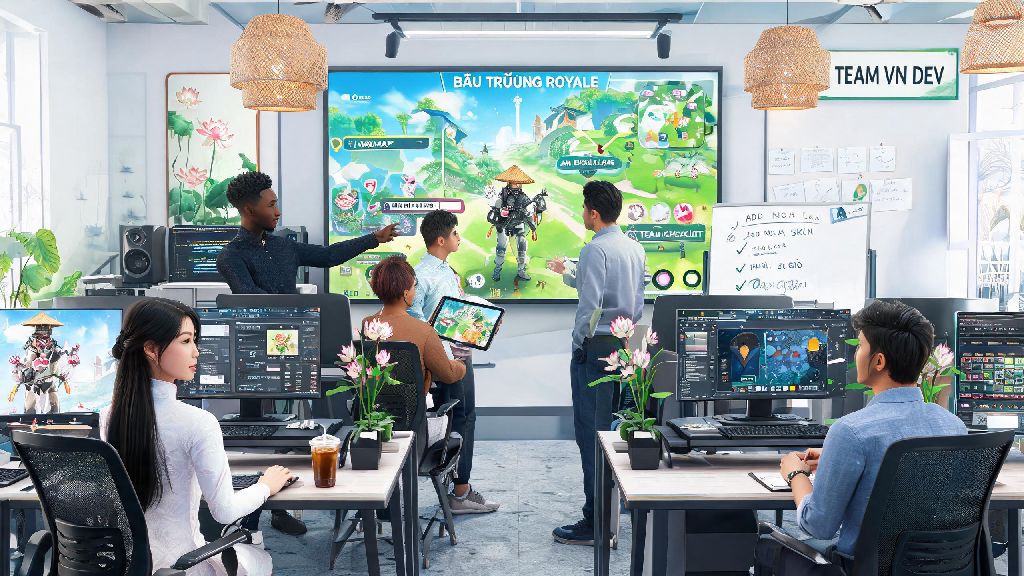
If you’ve spent hours dropping onto Bermuda Remastered, grinding ranked matches, or trading rare skins with your squad, you’ve probably wondered who is the creator of Free Fire at least once. This wildly popular mobile battle royale has amassed over 1 billion downloads worldwide, but most players know almost nothing about the team that built it, the inspiration behind its core mechanics, or the small design choices that made it stand out in a crowded mobile gaming market. We’re breaking down everything you need to know, from the studio’s founding story to little-known facts that even long-time Free Fire fans miss.
The Core Team Behind Free Fire’s Creation
Many fans mix up Garena and the actual team who is the creator of Free Fire, so it’s important to clarify the distinction: Garena is the Singaporean digital entertainment publisher that handled marketing and distribution, while 111dots Studio is the original Vietnamese development team that built the core game. The small 20-person team, based in Ho Chi Minh City, was founded in 2016 specifically to build a mobile battle royale that worked for users who didn’t own high-end phones. Garena acquired the studio just six months into development to give them access to larger server infrastructure and regional marketing support.
The team’s initial mission was rooted in a gap they noticed in the market in 2017. Other mobile battle royales like PUBG Mobile required at least 3GB of RAM to run smoothly, which cut out roughly 70% of mobile users across Southeast Asia, South Asia, and Latin America. The Free Fire team prioritized low-end device compatibility above almost everything else, even if it meant using simpler graphics than their competitors. That choice alone is why the game was able to build a massive audience in regions where most people use budget smartphones under $200.
Key Design Choices That Shaped Free Fire’s Identity
The team who is the creator of Free Fire didn’t just copy existing battle royale mechanics, either – they tested every feature with real mobile players first to make sure it felt intuitive on touchscreens. Unlike other titles that pushed for 30+ minute matches and hyper-realistic gunplay, the Free Fire team centered their entire design around short, accessible gameplay that fit into casual schedules. They ran user research across 8 countries before launch, and found that 82% of mobile gamers play for 15 minutes or less per session, usually during commutes or work breaks.
That research led to three non-negotiable design rules the team followed through the entire development process:
You can see these rules reflected in every part of the game today. The 10-minute match length is still one of Free Fire’s biggest draws for players who don’t have time to commit to long battle royale rounds. The character ability system, which lets players pick unique skills like healing or speed boosts, was also added to give casual players a way to contribute to squads even if they didn’t have perfect aim. That focus on inclusivity is a big part of why the game has such a diverse, global player base.
How the Creator of Free Fire Responded to Early Player Feedback
After Free Fire launched in late 2017, the team didn’t just sit back and release random content updates. They set up community feedback channels in 12 different languages, and ran monthly surveys to ask players exactly what they wanted to see added to the game. I’ve been playing Free Fire since its first closed beta, and I was shocked at how quickly the team rolled out fixes for common pain points in those early days. For example, when thousands of players reported frame drop issues on budget Samsung Galaxy J series phones in 2018, the team pushed a targeted update in 12 days that fixed the issue for 80% of affected users.
The first custom map, Kalahari, is another example of how the team centered player input in their decisions. For six months after launch, the only available map was Bermuda, and players consistently asked for a desert-themed map with more vertical combat options and tighter zones. The team worked with top players from Brazil, India, and Indonesia to test the Kalahari build for three months before releasing it, adjusting loot spawn rates and terrain based on their feedback. The map was an instant hit, and still remains one of the most popular choices for casual and ranked matches alike.
The team also adjusted their monetization strategy based on player feedback. Early on, they sold character skins that gave small stat boosts, but players complained that it gave paying users an unfair advantage. The team removed all pay-to-win elements within two months of the feedback being shared, and shifted all monetization to purely cosmetic items, a policy they still follow today.
Little-Known Facts About Free Fire’s Development Journey
Even long-time Free Fire fans usually don’t know these small, fun details about the game’s early days. The original working title for Free Fire was “Survival Squad”, but the team changed it last minute because they wanted a shorter, more memorable name that translated well across different languages. They tested 17 different names with focus groups across 10 countries before landing on Free Fire, which tested highest for recall and excitement across all regions.
The first ever default character, Adam, was modeled after a junior developer on the 111dots Studio team who volunteered to do motion capture work for free during weekends to save the team money. The iconic Booyah emote that players use to celebrate wins also comes from the community: it was designed by a 17-year-old player from Brazil who won a 2019 community contest, earning a lifetime supply of in-game diamonds and a trip to Garena’s Singapore headquarters as a prize.
Another little-known fact: the team initially planned to charge $0.99 for the game, but decided to make it free to play just two months before launch. They realized that even a small upfront cost would lock out millions of players in low-income regions who didn’t have access to credit cards or app store payment methods. That choice is a big part of why the game hit 100 million downloads just six months after launch, a record for mobile battle royales at the time.
Next time you drop into a match and land that perfect clutch, you’ll have a better sense of who is the creator of Free Fire and the small, intentional choices that made the game what it is today. The team’s focus on accessibility, community feedback, and quick, fun gameplay is why it’s remained one of the most popular mobile games in the world, even as bigger budget competitors have come and gone. If you want to learn more behind-the-scenes Free Fire content, keep an eye on our site for more deep dives and exclusive facts.