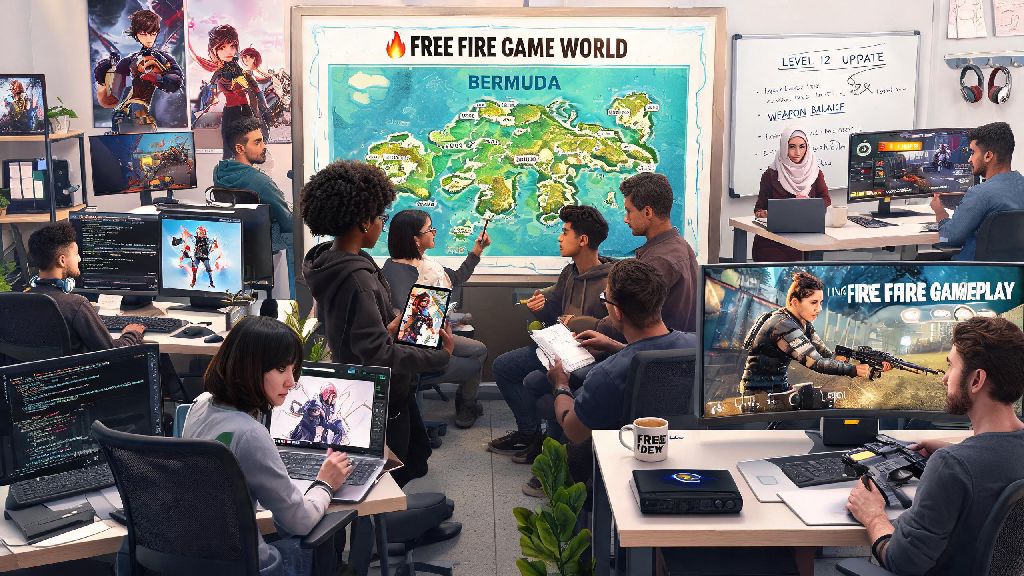
If you’ve spent hours dropping into Bermuda, grinding ranked matches to hit Grandmaster, or hunting for limited-edition character skins, you’ve probably wondered who make Free Fire at some point. The game has over 1 billion downloads worldwide and pulls in 150 million monthly active players, so it’s easy to assume it was built by a small team of genius developers working alone in a room. The reality is far more interesting, with hundreds of people across 12+ countries contributing to every patch, event, and balance change you see in the game. We’re breaking down exactly who builds the game you love, how they work, and how your feedback shapes their decisions.
Who Make Free Fire? The Core Studio and Parent Company Behind the Game
Free Fire was first developed by 111dots Studio, a small game development team based in Ho Chi Minh City, Vietnam, founded in 2011. The team originally built small casual mobile games before pitching the battle royale concept that would become Free Fire in 2016. 111dots Studio still handles all core gameplay development today, from building new maps to designing character abilities and tweaking weapon recoil.
Before Free Fire launched in 2017, 111dots was acquired by Garena, the digital entertainment arm of Singapore-based Sea Limited. Garena handles all global distribution, localization, esports events, and community management for the game, so they’re the face of Free Fire for most players. Sea Limited also runs e-commerce and digital payment platforms across Southeast Asia, so they have the infrastructure to support Free Fire’s massive global player base without server outages or lag during peak play times.
It’s important to note that 111dots still operates as an independent studio under Garena, so they have full control over core gameplay decisions. That means they can prioritize what’s best for players instead of being forced to push changes that only prioritize profits, which is part of why the game has stayed so popular for so long.
The Specialized Teams That Build Every Part of Your Free Fire Experience
Beyond the core development team at 111dots, there are 12+ specialized teams across Garena’s global offices that work together to make Free Fire feel tailored for players in every region. Most of these teams have 20 to 50 members each, and they all coordinate closely to make sure updates roll out smoothly across all markets.
Some of the key teams you might not know about include:
All teams work in 2-week sprint cycles, which is why you see small bug fix and balance updates every two weeks, and major season updates every two months. This fast cycle lets them respond to player feedback almost immediately, instead of making players wait 6 months for small changes like many other AAA games do.
How Player Feedback Shapes What the Free Fire Development Team Builds
The teams who make Free Fire don’t just make decisions in a vacuum, either. They actively solicit feedback from players across every region before rolling out any major changes, and most updates are heavily adjusted based on what players say. They run closed beta tests for every major update in 3 to 4 regions first, inviting 100k+ active players to test new features and submit feedback before the global launch.
For example, when the OB40 update first launched in beta with a new character ability that let players revive teammates instantly without using a revive kit, beta players said it was way too overpowered for ranked play. The balance team adjusted the ability’s cooldown from 60 seconds to 120 seconds, and added a restriction that it can only be used once per match, before rolling the update out globally.
They also monitor social media, in-game feedback forms, and even community Discord servers to pick up on small issues players report, like glitchy map spots or unbalanced weapon recoil. 90% of minor bug fixes released in monthly patches come directly from player reports, which is why the game feels so responsive to what the community actually wants. I’ve submitted 3 bug reports over the last year for small map glitches I found, and two of them were fixed in the very next patch, which is way faster than most other mobile games I play.
When you leave feedback in the in-game form, it gets sorted by region and category, then sent directly to the relevant team to review. They don’t respond to every individual submission, but they read every single one, and common feedback points get added to their priority list for future updates.
What's Next For the Teams Behind Free Fire?
The development team has a lot of big plans for the next couple of years, and they’re currently hiring 200+ new staff across all teams to keep up with player demand. One of their biggest priorities right now is optimizing the game for lower-end devices, so players with 2GB RAM phones can still run the game at 60fps without lag, even when new, more detailed maps launch.
Cross-platform play is in early testing, though the team has said they won’t roll it out until they’re 100% sure mobile players won’t be at a disadvantage against PC or console players. They’re also testing a new competitive ranking system that will make it harder for smurf accounts to ruin matches for new players, with more strict skill-based matching for all ranked modes.
They’re also planning more global collabs, with music artists, movie franchises, and even other game IPs coming in the next 12 months. The events team has said they want to make collabs more interactive this year, so players can earn exclusive rewards by completing themed challenges instead of just buying skins in the store.
For esports fans, the team is expanding regional tournament prize pools by 30% this year, and adding more amateur qualification paths so small local teams can compete for spots in the Free Fire World Series. They’re also adding in-game watch parties for major tournaments, so you can watch matches with your friends and earn rewards while you watch.
Whether you’re a casual player who only logs on for weekend events or a ranked grinder chasing the Grandmaster title, it’s easy to see the passion the teams who make Free Fire put into every part of the game. Next time you load into a match, collect a new event skin, or jump into a limited-time game mode, you’ll know exactly who put in the work to make that experience possible. If you want to stay updated on what the development team is working on next, keep an eye on official in-game announcements and community posts for sneak peeks of upcoming updates.