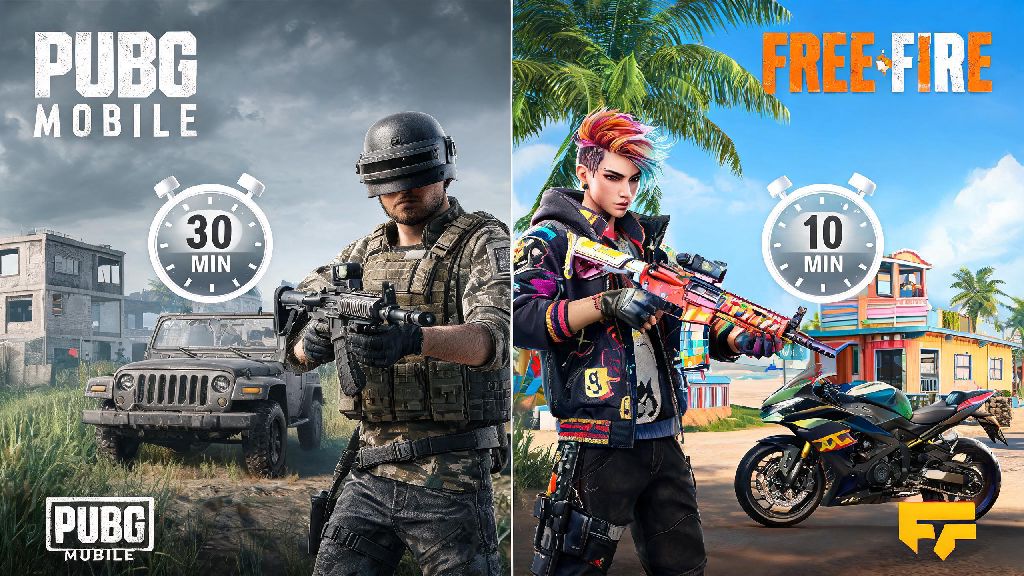
If you’ve spent any time browsing mobile battle royale games, you’ve almost certainly asked yourself which is better PUBG or Free Fire at least once. Both titles dominate the mobile gaming space, with hundreds of millions of active players across the globe, and each has its own dedicated fan base that swears their pick is the clear winner. But there’s no one-size-fits-all answer here—your preference will depend a lot on your device, how much time you have to play per session, and what you look for in a multiplayer game. I’ve put hundreds of hours into both titles over the last few years, so I’m breaking down the key differences to help you make the call without wasting hours downloading the wrong game first.
Core Gameplay Differences: Which Is Better PUBG or Free Fire for Your Playstyle?
When weighing which is better PUBG or Free Fire, match length is the first difference most players notice immediately. PUBG Mobile matches run between 30 and 40 minutes, with 100 players dropped onto a large, realistic map with detailed terrain, realistic ballistics, and complex recoil patterns. Looting takes longer, positioning matters far more, and a single mistake can cost you the match even if you’ve been playing well for 20 minutes. If you prefer slow, strategic gameplay that rewards careful planning, PUBG will feel more satisfying, as it lets you lean into stealth, map knowledge, and long-range fights that require actual skill to pull off.
Free Fire matches, by comparison, only last 10 to 15 minutes, with 50 players dropped onto a much smaller, more arcade-style map. Movement is faster, recoil is far more forgiving, and there are even special character abilities that let you heal faster, move quicker, or deal extra damage in fights. The pace never lets up, so you’ll run into other players within the first two minutes of almost every match, instead of spending 10 minutes looting before you see your first opponent. It’s perfect for players who want to get right into the action without the slow build that PUBG relies on.
I’ve found PUBG is way better if I have a full evening free to sit down and focus, but Free Fire is my go-to when I only have 15 minutes between work tasks or while waiting for a friend to show up. You don’t have to commit a huge chunk of time to get a full, satisfying match in with Free Fire, which is a huge plus for casual players who don’t game as their main hobby.
Device Performance and Accessibility Comparison
One of the biggest factors that separates the two games is how well they run on different types of devices. PUBG Mobile requires at least 4GB of RAM, a relatively new mobile processor, and 6 to 8GB of free storage to install and run smoothly. If you’re on a budget phone that’s more than two years old, you’ll likely experience lag, dropped frames, and even random crashes mid-match, even if you turn all the graphics settings down to the lowest option. It also requires a stable, high-speed internet connection to play without lag, so it’s not a great pick if you often play on the go with spotty cell service.
If you’re trying to decide which is better PUBG or Free Fire for your old phone, Free Fire is almost always the answer. It only requires 2GB of RAM minimum, takes up 2 to 3GB of storage, and runs smoothly on almost every budget phone released in the last five years. It also works well on slower 4G connections, so you can play it on your commute or while traveling without worrying about constant lag spikes. Over 60% of mobile gamers in emerging markets use budget devices under $200, which is a huge reason Free Fire has such a massive player base in South Asia, Latin America, and Africa. It’s built to be accessible to as many people as possible, without requiring a high-end flagship phone to enjoy.
I used to play on a 3GB RAM phone a few years back, and PUBG would crash mid-match at least once every three games, while Free Fire ran without a single issue even when I was on 4G instead of Wi-Fi. If you don’t want to spend hundreds of dollars on a new phone just to play battle royale games, Free Fire is the obvious choice.
In-Game Progression, Monetization, and Cosmetics
Neither PUBG nor Free Fire are pay-to-win, which is a huge relief for players who don’t want to spend money to compete. All paid items in both games are purely cosmetic, so you won’t get any gameplay advantage from spending real money. That said, their approaches to monetization and rewards are very different, and that can make a big difference in how much you enjoy the game as a free-to-play player.
Free Fire gives away far more free rewards for regular play, including free skins, character unlocks, and battle pass points just for logging in daily. You don’t have to grind for hours to get cool cosmetic items, and there are new limited-time events every couple of weeks that give away even more free stuff. PUBG, by comparison, requires you to grind a lot more to get free rewards, and most of the premium skins are locked behind paid loot boxes that have very low drop rates for rare items.
That doesn’t mean PUBG’s monetization is bad, of course. If you prefer more understated, realistic skins that don’t break immersion, you’ll probably prefer PUBG’s offering over Free Fire’s over-the-top, neon-heavy cosmetic designs. Free Fire’s cosmetics are designed to be fun and flashy, while PUBG’s are designed to fit its realistic, military-style aesthetic, so which one you prefer comes down to personal taste.
Community and Competitive Scene Differences
Both games have huge, active communities and thriving competitive scenes, but they cater to very different types of players. PUBG Mobile has a larger global competitive circuit, with the annual PUBG Mobile Global Championship offering millions of dollars in prize pools for top teams. It’s a great pick if you want to compete at the highest international level, and there are tons of resources online to help you learn advanced strategies, recoil control tricks, and team compositions to climb the ranked ladder.
Free Fire’s competitive scene is more focused on regional tournaments, with lower entry barriers for new players who want to start competing. You don’t need to have years of experience to join local amateur tournaments, and the ranked system is far more forgiving for casual players. Free Fire’s ranked system is far more forgiving for new players, so you can climb ranks faster even if you don’t play 10+ hours a week. PUBG’s ranked system is much more competitive, so you’ll need to master recoil, map knowledge, and team strategies to climb out of the lower tiers.
I’ve found it way easier to find casual teammates for Free Fire, since most players aren’t taking every match super seriously, while PUBG lobbies are full of sweatier players who get mad if you make a small mistake. Both games have strict anti-cheat systems, but Free Fire’s anti-cheat is more effective at catching low-effort cheaters in casual lobbies, so you’ll run into fewer hackers in your regular matches. If you just want to have fun playing with friends instead of grinding for rank, Free Fire’s community is a much better fit.
At the end of the day, the answer to which is better PUBG or Free Fire comes down to what you value most in a battle royale game. If you have a high-end device, love slow strategic gameplay, and want to compete in high-stakes global tournaments, PUBG is the right pick for you. If you have a budget device, only have short bursts of time to play, or prefer casual, fast-paced action with lots of fun cosmetic rewards, Free Fire will be a much better fit. Don’t be afraid to try both if you have the storage space—you might even end up playing both for different situations, like I do. The best part of the mobile battle royale space is there’s a great option for every type of player, no matter your setup or playstyle.