If you’ve spent hours dropping into Bermuda, clutching a M4A1 to outplay 49 other players, or cheered on your favorite Free Fire streamer during global tournaments, you’ve probably wondered which country invented Free Fire at least once. The battle royale title has amassed over 1 billion downloads worldwide, with a massive fanbase across Southeast Asia, Latin America, and the Middle East, but its roots are often confused with other popular games in the genre. We’re breaking down the full origin story, from the studio that built it to the cultural context that shaped its design, plus little-known details most casual players never hear about.
Which Country Invented Free Fire, Exactly?
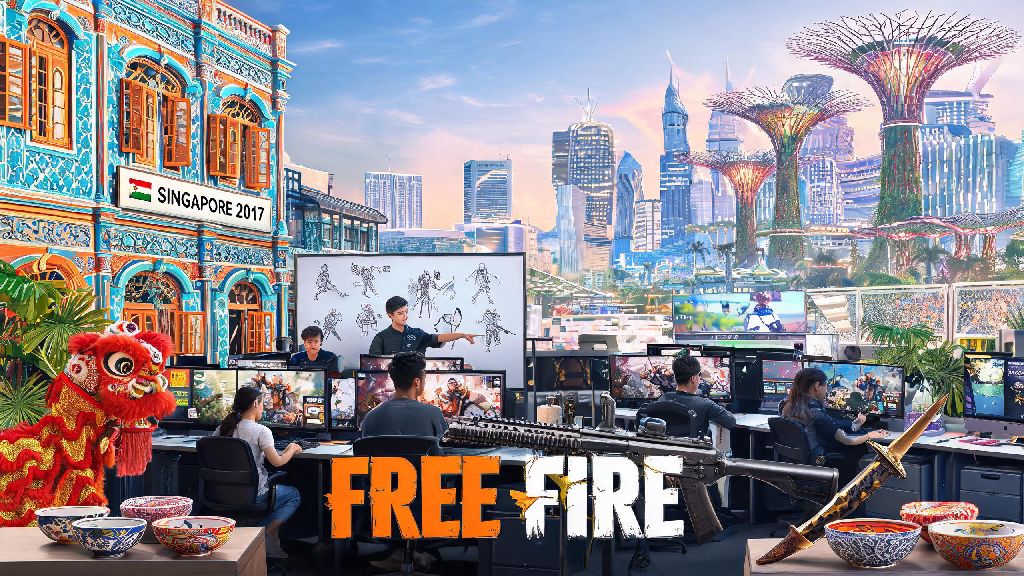
The short official answer is Singapore, but the full story has a bit more nuance than a single country label. Garena, the parent company that owns and publishes Free Fire, is headquartered in Singapore, making the island nation the official country of origin for the game. Garena is part of Sea Limited, a global consumer internet company founded in Singapore in 2009, that operates across digital entertainment, e-commerce, and digital financial services.
If you’ve seen conflicting answers when you search which country invented Free Fire online, this mix of regional talent is usually the reason for the confusion. Early in development, Garena acquired 111 Dots Studio, a small independent game development team based in Vietnam, to lead the core build of the game. That means a large portion of the early development work was done by Vietnamese engineers and designers, but the IP and overall direction of the game has always been led by Garena’s Singapore-based leadership team.
This cross-region setup is actually pretty common for global game studios, especially those that build products for audiences across multiple continents. It also explains why Free Fire feels so well suited to players from different cultural backgrounds right out of the gate, with design choices that prioritize accessibility for all types of mobile users.
How Free Fire’s Design Was Tailored for Global Mobile Audiences
Part of the reason so many people guess different answers when asked which country invented Free Fire is that the game feels so well adapted to every market it’s in. Unlike many other battle royale titles that launched first for high-end PC or flagship mobile devices, Free Fire was built with emerging market players top of mind from the very first line of code. Unlike other battle royale titles that require high-end hardware to run smoothly, Free Fire was built from the ground up to work on devices with less than 2GB of RAM.
The development team focused on keeping the file size small, cutting out unnecessary graphic flourishes that would drain battery life, and optimizing gameplay to run smoothly even on 3G connections. Matches are capped at 10 minutes, which is perfect for players who squeeze in gaming sessions during commutes, work breaks, or between household tasks, rather than having hours to dedicate to a single match.
Many mobile game developers in the region follow this user-first design approach, building titles that fit the needs of players who might not have access to flagship devices or unlimited high-speed internet. For example, casual card game fans in India often prefer lightweight, fast-match titles that don’t eat up data or storage space, and Jaiho Rummy is a popular pick for players looking for quick, skill-based matches they can play between Free Fire rounds. That focus on accessibility is exactly what helped Free Fire outperform many of its competitors in markets where mobile gaming is the primary way most people access interactive entertainment.
The development team ran over 20 rounds of user testing across 8 countries before the official global launch, adjusting everything from control sensitivity to default audio levels based on feedback from players who used a wide range of devices. They also cut out unnecessary graphic effects that would drain battery life on older phones, a choice that many players still appreciate today, especially if they play while commuting or in areas with limited access to charging ports.
Common Myths About Free Fire’s Origin Debunked
If you’ve ever seen a heated social media debate about which country invented Free Fire, these myths are usually at the center of it. Misinformation about the game’s roots spreads quickly, especially as it continues to grow its fanbase in new markets. We’re breaking down the most common false claims below:
A lot of these myths spread because of how quickly the game expanded across multiple markets at once, with localized content that makes it feel like it was made specifically for players in every region it operates in. It’s easy to assume a game that feels so tailored to your local culture was made close to home, but the global development team worked hard to build that level of personalization for every market.
How Free Fire’s Origin Shapes Its Global Community Today
Even today, new players often ask which country invented Free Fire when they see how many different regional events run at the same time across the globe. The game’s cross-region founding has made it a truly international title, with no single market getting preferential treatment when it comes to content updates or event rewards. The Singaporean core of the game’s leadership means it’s always prioritized inclusivity for players from all backgrounds, with no single region getting preferential treatment for content updates or event rewards.
The annual Free Fire World Series is a perfect example of this global focus. Last year’s tournament had over 100 million live viewers, with teams from 18 different regions competing for the grand prize, a level of global participation that very few mobile games have ever managed to hit. The team also regularly works with local content creators in each market to co-design skins and events, so players always see something that feels familiar and relevant to their culture, whether that’s a cricket-themed outfit for Indian players or a samba skin for Brazilian fans.
Garena also invests heavily in local community programs in every market it operates in, from youth gaming tournaments in small towns to charity events that raise funds for local causes. That commitment to supporting local communities is part of why the game has such a loyal, passionate fanbase across so many different countries. Unlike many other global game titles that treat smaller markets as afterthoughts, Free Fire builds its entire roadmap around feedback from players in every region it serves.
At the end of the day, the answer to which country invented Free Fire is more layered than a simple one-word response, but its official origin in Singapore, combined with the global talent that built it, is exactly what makes it feel like a truly international game. It didn’t just cater to players in one region when it launched, and it still prioritizes accessibility and personalization for every player, no matter where they are in the world. Next time you drop into a match, you’ll know exactly the cross-cultural team and vision that made the game you love possible.