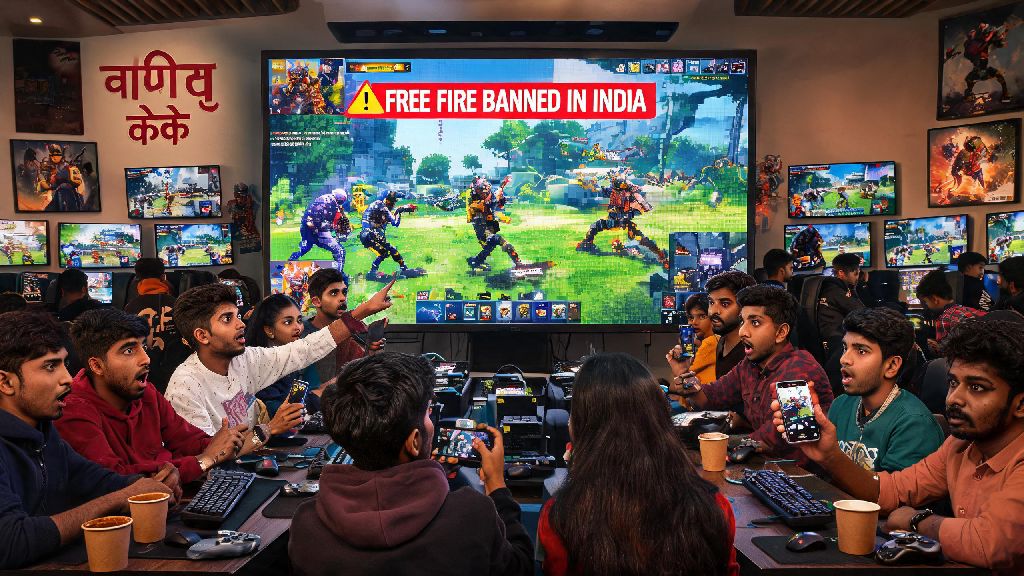
If you’re a long-time Free Fire fan based in India, you almost certainly remember the shock of the ban announcement, when you opened your app drawer to launch the game only to find it wouldn’t connect to servers, or searched for it on the Google Play Store and found it completely removed. The question of why Free Fire ban in India took over every gaming group chat, Reddit thread, and Instagram comment section for weeks afterward, as players scrambled to figure out what happened to the game they’d spent hundreds of hours playing. There were a thousand rumors flying around right after the ban, from claims that it was pulled for excessive violence to whispers of legal disputes between Garena and Indian regulators. We’re breaking down all the verified facts here, no unsubstantiated gossip, so you can get the full story behind one of the biggest mobile gaming events in Indian history.
Official Reasons for the Free Fire Ban in India
The official ban on the original Free Fire app came directly from the Ministry of Electronics and Information Technology (MeitY), under Section 69A of the Information Technology Act, 2000. This section allows the Indian government to block access to any online platform if it is deemed to pose a threat to national security, the sovereignty of India, or the privacy of Indian users. The ban was announced alongside bans on 53 other apps with links to China, even though Garena’s parent company Sea Limited is based in Singapore. National security concerns were cited as the primary official justification for the ban, with regulators stating that the app was collecting sensitive user data and transferring it to servers located outside of India, where it could be accessed by unauthorized third parties.
While the government did not release full, public evidence of the data misuse at the time of the ban, this move aligned with a broader series of app bans that started in 2020, following border tensions between India and China. Many players were confused by the inclusion of Free Fire in the list, since Sea Limited is not a Chinese company, but regulators noted that the app had significant operational ties to Chinese tech firm Tencent, which held a stake in Sea Limited at the time. Secondary concerns raised by parent groups and child welfare organizations about excessive screen time, unregulated in-app purchases by minors, and exposure to violent content did not factor into the official ban order, though they did contribute to public support for the restriction in some circles.
Common Myths About the Free Fire Ban Debunked
In the weeks after the ban was announced, dozens of false claims spread across social media, as frustrated players looked for answers about why their favorite game was gone. Most of these myths have no basis in official statements or verifiable facts, and we’re clearing up the most common ones below:
Always verify any ban-related news from official government sources or trusted gaming news outlets to avoid falling for false information. A lot of these myths spread because players were upset about losing years of in-game progress, paid skins, and rank positions, so it was easy for unsubstantiated claims to go viral. Some bad actors even used these rumors to promote fake versions of Free Fire that stole user data, so it’s extra important to check the source of any news you see about the ban.
What the Ban Means for Existing Indian Free Fire Players
Right after the ban was announced, players who already had the original Free Fire app installed on their phones could still play for a few weeks, but Garena eventually cut off server access for all Indian IP addresses to comply with the government order. That meant anyone who didn’t transfer their account to Free Fire Max during the grace period lost access to all their in-game content, including paid skins, characters, emotes, and rank progress they’d earned over years of play. If you have remaining in-game currency on your old Free Fire account, you can reach out to Garena support to request a refund or transfer to your Free Fire Max account, though the company only accepts these requests for a limited time after the ban, so you may not be eligible if you wait too long.
The ban also had a huge impact on the competitive Free Fire scene in India. Hundreds of professional players who had spent years training for national and international tournaments lost their main source of income overnight, as all official Free Fire tournaments in India were canceled. Many of these players switched to competing in BGMI tournaments, or shifted their content creation focus to Free Fire Max, which has a smaller but still active competitive scene in the country. Even casual players felt the impact, as many had made close friends through the game’s multiplayer modes, and lost touch when the servers went down.
I’ve talked to dozens of casual players in my local gaming group who said they stopped playing mobile battle royales entirely for months after the ban, just because they were too disappointed about losing all their progress. A few even tried using VPNs to access Free Fire servers in other countries, but most gave up after facing constant lag, account bans, and security risks from unregulated VPN services.
Will the Original Free Fire Ever Return to India?
This is the question I get asked more than any other by Free Fire fans, and the short answer is that it’s possible, but not guaranteed. Over the past few years, Garena has made a lot of changes to its operations in India to comply with local regulations, including moving all Free Fire Max user data to local Indian servers, adding stricter age verification checks to prevent minors from playing without parent permission, and limiting daily play time for users under 18 to 3 hours a day. They’ve also cut ties with Tencent, which no longer holds a stake in Sea Limited, removing one of the main concerns raised by regulators during the original ban.
As of now, there is no official timeline for the original Free Fire's return to Indian app stores. The Indian government has shown that it is willing to lift bans on apps that fully comply with local data and security regulations, as we saw with BGMI’s return 10 months after it was banned over similar national security concerns. But Garena has not made any public statements about applying for approval to bring back the original Free Fire, and it’s likely that the company is focusing most of its resources on growing Free Fire Max in India instead, since it has better graphics, more features, and a larger global user base than the original app.
If you’re desperate to play Free Fire right now, don’t waste your time with VPNs or fake APK files you find online. These can lead to permanent account bans, and many fake APKs are loaded with malware that can steal your personal information or banking details. If you want to play a legal version of the game in India right now, Free Fire Max is your only safe, official option. It has almost all the same content as the original Free Fire, and you can even play with friends who are on the original version in other countries, as long as you have a stable internet connection.
At the end of the day, why Free Fire ban in India happened boils down to national security and data privacy concerns raised by Indian regulators, not the content-related myths you might see floating around social media. While it’s frustrating for long-time players who lost years of progress, the good news is that there is still a legal, official way to play Free Fire in India through Free Fire Max, and there’s a chance the original game could return in the future if Garena meets all the government’s requirements. For now, stick to official app stores and verified versions of the game, and follow Garena’s official social media channels for the latest updates about any future changes to the ban.